Translation and Metabolism in Myeloid Malignancies
Dr. Christina Mayerhofer
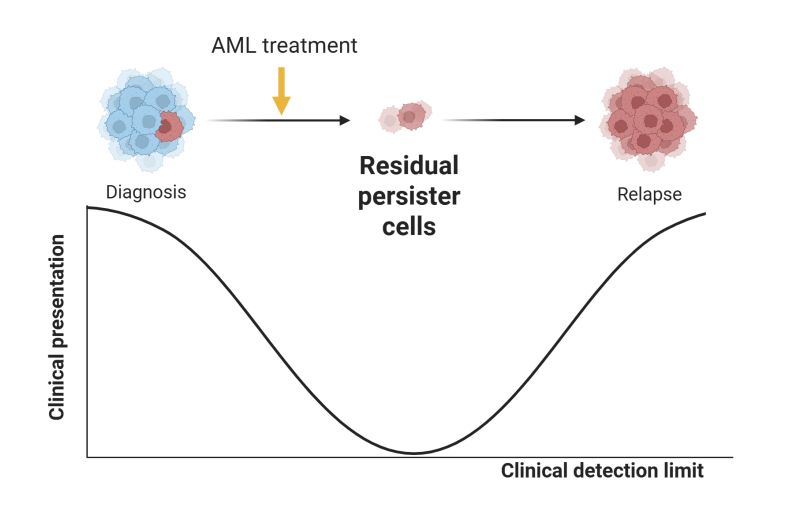
The Laboratory for Translation and Metabolism in Myeloid Malignancies investigates the molecular mechanisms underlying treatment resistance and disease relapse in myeloid leukemias.
In the treatment of acute myeloid leukemia (AML), high relapse rates following induction chemotherapy lead to poor treatment outcomes. While the majority of leukemic blasts are effectively eliminated by cytotoxic therapies, a resistant subpopulation of “persister” cells (chemoresistant persister cells) survives. These cells usually remain in the bone marrow and later trigger a relapse of the disease.
Our research shows that persisters do not represent a static state, but rather adapt metabolically under the extreme selective pressure of chemotherapy. This cellular adaptation forces leukemia cells into an energetically costly, anabolic state characterized by continuous protein synthesis (translation) and increased nucleotide and lipid metabolism—a behavior that cells normally avoid under physiological stress in order to conserve energy. We view chemotherapy not only as a tool for tumor ablation but also use it to force biological adaptation processes and thereby identify vulnerabilities in persister cells. Since this inflexibility and dependence on specific metabolic processes exist only during or shortly after therapy, they open a therapeutic window for dynamic synthetic lethality. By synchronously blocking these induced cellular states, our laboratory aims to selectively eliminate persister cells in order to improve survival rates for patients with leukemia.
Future Projects and Goals
Systematically deciphering the microenvironment to identify new ways to improve treatment response rates. The research program is divided into three complementary areas of focus:
- Metabolic Dependencies: Using functional screening methods and targeted nutrient restrictions, we identify genetic and metabolic vulnerabilities that selectively emerge in chemoresistant leukemia cells under therapeutic stress.
- Clinical validation: Using highly sensitive molecular ribosome and polysome profiling technologies, we identify the cellular stress response in rare cell populations
- Microenvironmental interactions: We investigate cellular communication within the leukemic bone marrow niche to understand how stromal cells are reprogrammed to support the survival and protein synthesis of leukemia cells

Dr. Christina Mayerhofer
Independent DKTK Junior Clinical Cooperation Unit – partner site Freiburg