11/03/2026
Print PageFederal Ministry of Research, Technology and Space (BMFTR) funds joint project to improve patients’ quality of life following radiation treatment
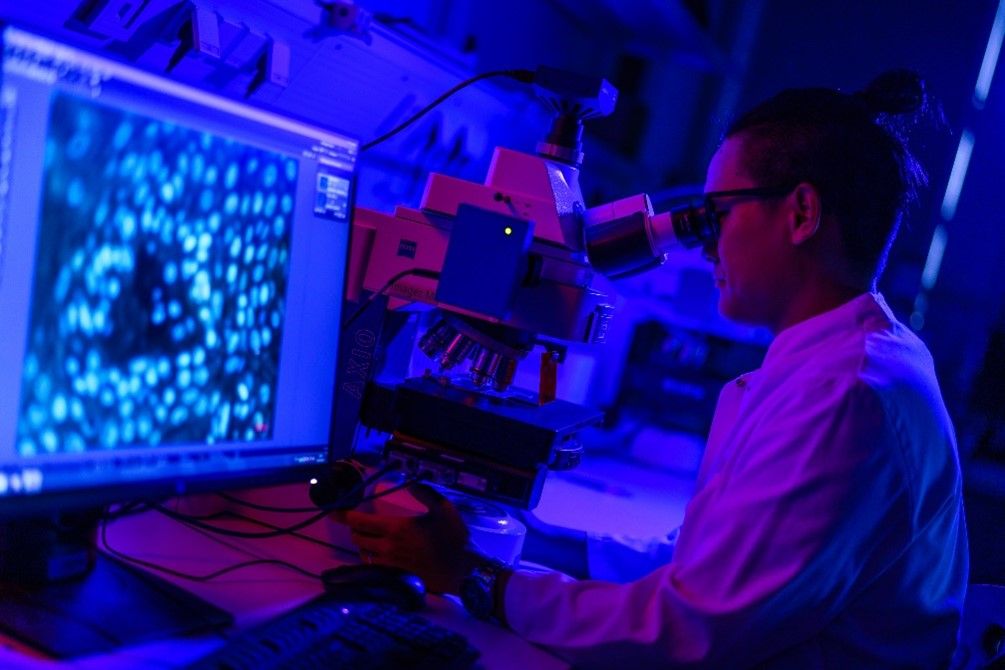
Brain tumors are amongst the most common diseases that require radiotherapy in both children and adults. Although the treatment is effective, healthy brain cells can be damaged in the long term depending on the location and size of the irradiated areas as well as the intensity of the radiation. In about one fifth of the patients treated, there are visible changes to the healthy brain, detectable using MRI. In up to 20 percent of cases, these changes can cause symptoms and noticeably reduce the quality of life of cancer survivors.
The UncovRT (Uncover molecular mechanisms of side effects after cranial Radiation Therapy to improve quality of life for long term survivors of brain cancer) project aims to systematically record the influence of post-treatment changes to the brain on quality of life and brain function. This is being done for the first time in both adult patients and children. The project is supported by the Federal Ministry of Research, Technology and Space (BMFTR) as part of the National Decade Against Cancer with funding of over EUR 2 million.
As part of this network, scientists at research institutions in Dresden, Hamburg, Heidelberg, Essen and Dortmund are working closely together to build a joint database for clinical, translational and preclinical data. This platform will form the basis for analyzing changes in follow-up MRIs that may occur months or years following treatment. In preclinical studies based on mouse models, the researchers are investigating biological mechanisms of radiation-induced brain damage and identifying molecular parameters that predict the risk of such damage. At the same time, drugs that have already been approved are being tested for their ability to prevent such side effects. The knowledge gained from this will, in turn, optimize existing prediction models and provide targeted support in therapy planning.
"The National Decade Against Cancer paves to way to understanding the long-term consequences of radiotherapy at a previously unattained depth. Projects such as UncovRT help us to uncover new scientific correlations and derive impulses for therapies that better meet the needs of patients," says Prof. Esther Troost, Dean of the Carl Gustav Carus Faculty of Medicine at TU Dresden.
Those affected are also actively involved in the process: An adult brain tumor survivor or the mother of a sick child both play an accompanying role in the project as patient representatives, all the while contributing their individual perspectives to research discussions. A particular focus is on ensuring that the patients involved can comprehend the research results and therefore communicate them to other cancer survivors and to the general public.
With UncovRT, Dresden University Medicine, in collaboration with the German Cancer Consortium (DKTK) and other partner institutions, is creating a pioneering platform for research into long-term radiation damage and laying the foundation for future clinical studies to improve the quality of life of brain tumor survivors.
National Decade Against Cancer
With the National Decade Against Cancer, the BMFTR is strengthening cancer research in Germany. As part of this initiative, the Federal Ministry is funding interdisciplinary research in the field of "cancer survivors," as these individuals often have to deal with the long-term consequences of their disease or the therapy used to treat it. However, the processes that lead to these detrimental consequences are largely unknown. Projects are therefore being funded to better understand the causes of these long-term consequences and develop the basis for new preventive measures that can improve the life expectancy and quality of life of cancer survivors in the future.
SOURCE: TU Dresden
More about UnvovRT:
BFMTR press release (German only)
UDE press release (German only)